Main cities
- Sao Paulo (approx. 11.5M)
- Rio de Janeiro (approx. 6.2M)
- Brasilia (approx. 2.8M)
- Salvador (approx. 2.4M)
Developer intelligence for local identifiers, regional payment protocols, bank routing details, and locale conventions.
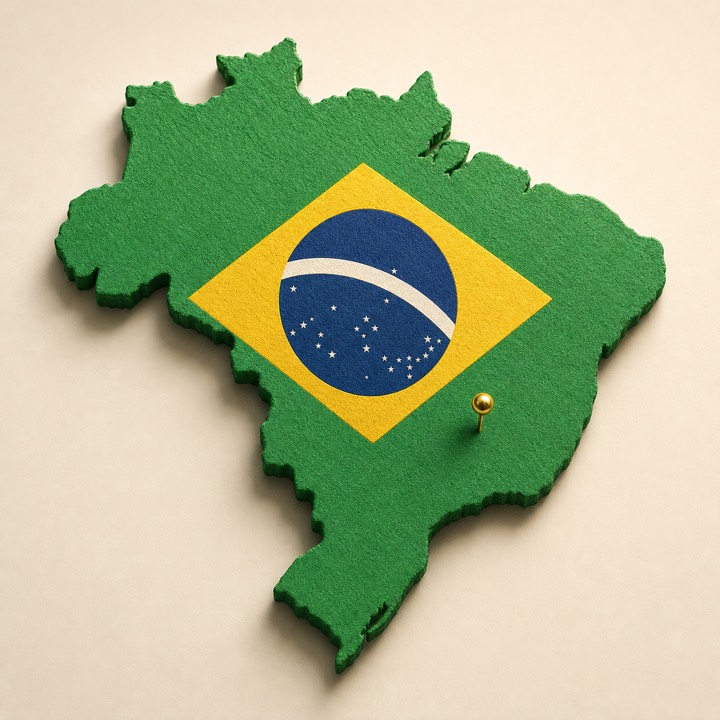
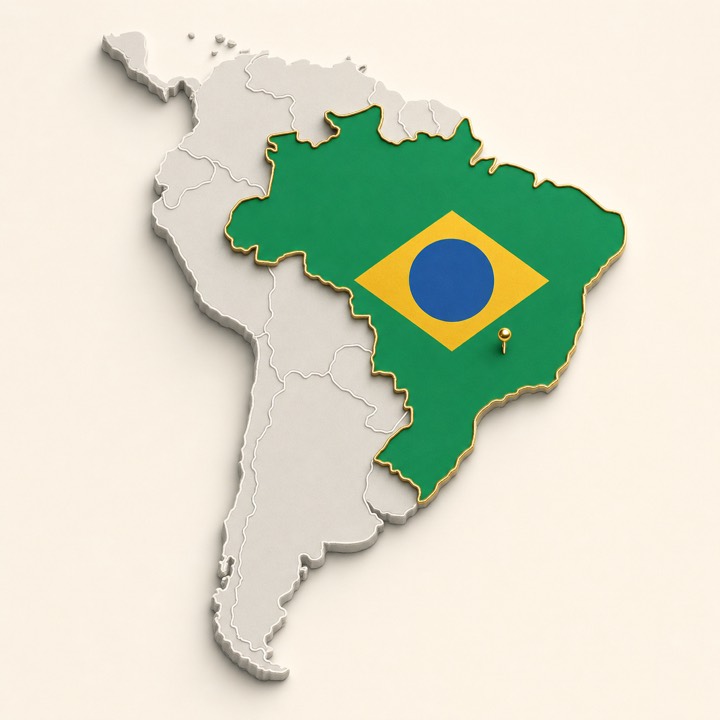
Quick national context for forms, onboarding flows, locale defaults, and developer fixtures.
One-click values developers repeatedly need for forms, payloads, tests, and locale-aware formatting.
Primary local tools stay visible first; lower-priority reference workflows remain searchable without crowding the MVP catalog.
Format, checksum, structure, and normalization run locally in browser. Registry status, bank account ownership, government confirmation, and legal identity verification require official external systems.
Validate boleto barcode shape, inspect bank code, currency, due-date factor, amount fields, and check digit boundaries.
Normalize Brazilian CEP postal codes, validate NNNNN-NNN display, batch-check address lists, and prepare delivery-safe fixtures.
Validate CNPJ company identifiers, inspect both check digits, normalize punctuation, and build safe business test cases.
Validate CPF numbers, replay modulus-11 check digits, mask personal identifiers, and generate safe fictional fixtures locally.
Audit Brazilian records across CPF, CNPJ, CEP, phone, Pix, boleto, tax, banking, and locale fields for completeness and safety.
Validate boleto linha digitável fields, normalize punctuation, replay field-level check digits, and mask payment references.
Validate 44-digit NF-e access keys, replay modulo-11 check digit math, split UF, date, CNPJ, model, series, and number fields.
Normalize Brazilian phone numbers to +55 E.164-style display, preserve DDD, mask contact data, and generate safe fixtures.
Validate Pix keys and BR Code payloads, inspect EMV fields, generate QR-friendly payment data, and explain offline payment boundaries.
Validate RENAVAM-shaped vehicle registry numbers, inspect length and check-digit behavior where possible, and create safe vehicle fixtures.
No matching workbenches found for this country. Try local identifiers, payments, address, phone, or tax terms.
Official identifier specs plus related browser tools for personal, business, vehicle, address, and registry-shaped Brazil data.
Pre-rendered interactive validator tools to test identifiers in a real browser.
Format Brazilian address blocks with street, number, complement, bairro, city, UF, CEP, and country fields for forms and labels.
Normalize Portuguese address text, preserve accents where needed, and prepare ASCII-safe variants for legacy systems.
Normalize and mask Brazilian agency and account fields, preserve check digits, and produce log-safe banking snippets.
Parse Brazilian bank-statement-like rows, normalize BRL amounts and dates, and prepare reconciliation-friendly transaction data.
Validate boleto barcode shape, inspect bank code, currency, due-date factor, amount fields, and check digit boundaries.
Convert boleto due-date factors to dates, inspect rollover-era assumptions, and prepare payment schedule test cases.
Parse Brazilian real amounts, normalize comma decimals, convert to integer centavos, and generate storage-safe payment fields.
Normalize Brazilian CEP postal codes, validate NNNNN-NNN display, batch-check address lists, and prepare delivery-safe fixtures.
Inspect CNAB 240 fixed-width records, count segments, flag line-length issues, and prepare bank-file diagnostics offline.
Inspect CNAB 400 fixed-width remittance or return files, validate row lengths, and summarize record-type distribution locally.
Inspect CNAE activity codes, normalize class and subclass notation, and prepare company-classification data for onboarding flows.
Inspect Brazilian CNH driver-license numbers, normalize eleven-digit records, and separate offline shape checks from official DETRAN status.
Validate CNPJ company identifiers, inspect both check digits, normalize punctuation, and build safe business test cases.
Audit onboarding fields for CNPJ, CNAE, IE, IM, address, fiscal document, banking, Pix, and contact readiness.
Inspect three-digit COMPE bank codes, normalize routing references, and prepare Brazilian bank-selection payloads for forms.
Generate implementation checklists for Brazilian identifiers, fiscal documents, payments, privacy masking, and official lookup boundaries.
Validate CPF numbers, replay modulus-11 check digits, mask personal identifiers, and generate safe fictional fixtures locally.
Inspect CT-e transport document keys, split access-key segments, replay check digits, and prepare logistics invoice fixtures.
Inspect DARF revenue-code shaped inputs, normalize dates and amounts, and prepare tax-payment payload notes for developers.
Audit Brazilian records across CPF, CNPJ, CEP, phone, Pix, boleto, tax, banking, and locale fields for completeness and safety.
Parse ISO and Brazilian DD/MM/YYYY dates, render pt-BR locale display, and expose date fields for localized interfaces.
Validate Brazilian DDD area-code patterns, classify mobile and landline shapes, and prepare contact-field diagnostics.
Inspect eSocial event identifiers, normalize employer references, and separate offline syntax checks from government receipt status.
Generate fictional Brazilian form payloads for identity, company, address, payment, invoice, and locale UI testing.
Normalize GNRE guide fields, identify UF, amount, taxpayer, and reference data needed before external state portal submission.
Run a browser-only Brazilian validation, formatting, or data-quality workflow tailored to this local standard.
Run a browser-only Brazilian validation, formatting, or data-quality workflow tailored to this local standard.
Inspect seven-digit IBGE municipality codes, split UF and locality hints, and prepare geography keys for data imports.
Inspect eight-digit ISPB participant codes, normalize payment-network references, and separate syntax from official participant status.
Redact Brazilian personal and financial data in logs, classify sensitive patterns, and document LGPD-safe debugging boundaries.
Inspect Mercosul and legacy Brazilian license plate patterns, classify format family, and prepare fleet-safe masked examples.
Validate boleto linha digitável fields, normalize punctuation, replay field-level check digits, and mask payment references.
Validate MDF-e manifest access keys, classify document model fields, and prepare cargo-document diagnostics offline.
Normalize municipal-registration references, identify city context fields, and prepare invoice-safe examples without claiming city status lookup.
Inspect Brazilian legal-nature codes, normalize numeric notation, and prepare business-register payload hints for company workflows.
Validate NFC-e access keys, explain consumer invoice key segments, and prepare upload-safe test keys for retail flows.
Validate 44-digit NF-e access keys, replay modulo-11 check digit math, split UF, date, CNPJ, model, series, and number fields.
Check NF-e XML payload readiness, spot common issuer, recipient, amount, and access-key fields before fiscal upload.
Normalize NFS-e service invoice references, identify municipal context, and document what city portals must verify externally.
Inspect NIS, PIS, and PASEP eleven-digit identifiers, normalize punctuation, mask values, and prepare payroll-safe fixtures.
Clean OCR output from Brazilian documents, restore common separators, detect CPF/CNPJ/CEP candidates, and flag risky artifacts.
Prepare Brazilian Open Finance consent payload notes, validate CPF/CNPJ party fields, and document browser-only privacy boundaries.
Normalize Brazilian passport-like document input, mask travel references, and prepare fictional identity document fixtures.
Compare amount, payer, recipient, Pix, boleto, bank-account, and invoice references to flag reconciliation mismatches locally.
Normalize Brazilian phone numbers to +55 E.164-style display, preserve DDD, mask contact data, and generate safe fixtures.
Detect Brazilian CPF, CNPJ, CEP, phone, boleto, Pix-like, and email patterns in text and produce privacy-safe masked output.
Decode Pix copy-and-paste BR Code text, inspect EMV fields, merchant data, CRC, amount, city, and transaction references locally.
Build Pix QR payload test strings from key, recipient, amount, city, and transaction ID fields while staying fully browser-only.
Validate Pix keys and BR Code payloads, inspect EMV fields, generate QR-friendly payment data, and explain offline payment boundaries.
Inspect EFD-Reinf event ID shape, normalize reporting-period hints, and document official submission boundaries.
Normalize RENACH driver-record references, check common document shape, mask values, and prepare transport onboarding fixtures.
Validate RENAVAM-shaped vehicle registry numbers, inspect length and check-digit behavior where possible, and create safe vehicle fixtures.
Inspect RG-shaped identity numbers, normalize issuer notation, mask document values, and document state-level offline limits.
Inspect SAT CF-e coupon keys, split fiscal document segments, and prepare retail diagnostics without contacting tax services.
Prepare Simples Nacional DAS references, normalize period and CNPJ inputs, and explain what browser-only checks cannot confirm.
Check EFD Contribuições payload shape, normalize period and establishment fields, and prepare safer tax-file diagnostics.
Inspect SPED EFD ICMS/IPI file headers and record-shaped lines, flag common separators, dates, CNPJ values, and fiscal periods.
Inspect state-registration IE values, normalize UF context, and document state-specific rules that require dedicated official validation.
Inspect Brazilian CNS/SUS card numbers, normalize fifteen-digit health identifiers, and separate offline shape checks from health-system status.
Check Brazilian transfer payload fields for bank code, agency, account, CPF/CNPJ, amount, and recipient consistency before handoff.
Generate fictional Brazilian identity, company, address, phone, payment, and invoice fixtures for local development and QA.
Check voter-title shaped numbers, normalize zones and sections, explain offline boundaries, and generate fictional electoral test values.
Inspect Brazilian UF codes, normalize state abbreviations, and prepare state-aware payloads for tax, address, and logistics forms.
IBAN, domestic account context, BIC/SWIFT, SEPA or local clearing notes, and payment-ready developer workflows.
Brazilian bank transfers usually require bank code, agency, account number, account type, and CPF/CNPJ owner fields.
Boletos use barcode and linha digitavel representations with bank, currency, due-date factor, amount, and check digits.
Brazilian money workflows use comma decimals and integer centavos for storage, APIs, invoices, and reconciliation.
Fixed-width bank files commonly use 240-character rows for remittance and return workflows.
Legacy fixed-width bank files use 400-character rows and need strict line-length validation before bank handoff.
Three-digit COMPE bank codes identify Brazilian financial institutions in many payment and account forms.
Eight-digit ISPB codes identify payment-system participants, especially in Pix and banking integrations.
Brazilian Open Finance flows require consent-oriented party identifiers, scopes, and privacy boundaries.
Pix keys and EMV BR Code payloads support instant-payment workflows, QR payloads, amount fields, and transaction references.
Traditional transfer flows require bank, agency, account, owner identity, amount, and recipient consistency checks.
Local payment systems, card context, bank transfer references, currency formatting, and browser-only payment data helpers.
Barcode and linha digitavel payment slips with amount, due-date factor, bank code, and check digit behavior.
Brazilian real workflows normalize comma decimals, integer centavos, and copyable payment payloads.
Debit and credit card flows follow global card-network rules plus Brazilian amount and document-field conventions.
Bank file workflows need row-length inspection, record-type summaries, and reconciliation-ready diagnostics.
QR-like payment payloads, descriptions, transaction IDs, and recipient fields need deterministic local checks before banking handoff.
Instant payment rail using keys, QR codes, copy-and-paste BR Code payloads, and EMV-style fields.
Traditional transfer records require bank, agency, account, owner document, and amount field consistency.
Verified legislative resources to validate compliance formats.
Central bank and official reference context for Pix, ISPB, Open Finance, and financial-system data.
Postal authority context for CEP and Brazilian address-format conventions.
National traffic authority context for CNH, RENAVAM, and vehicle-document workflows.
Official geography and statistics context for UF, municipality codes, and regional identifiers.
Tax administration context for CPF, CNPJ, fiscal documents, DARF, and compliance workflows.
Government technology context for official APIs, fiscal integrations, and identity-related services.
Electoral authority context for voter title, zone, and section data.
Core country registry details and national system standards.
+55
.br
Locale preferences, separator characters, and display configurations.
pt-BR
DD/MM/YYYY
Comma (,)
Dot (.)
NNNNN-NNN
Utility metrics, emergency networks, and infrastructure constants.
190
Display order, postal mask, street notation, and delivery-ready field sequence.
Maria Silva
Av. Paulista, 1000 - Bela Vista
01310-100 Sao Paulo - SP
BrazilMaria Silva — Person or organization receiving mail.
Av. Paulista, 1000 — Brazilian addresses usually include street type, name, and building number.
Bela Vista — Bairro or local district is commonly used for delivery context.
01310-100 Sao Paulo - SP — Eight-digit CEP plus city and UF state code.
Brazil — Country label for international mail and cross-border records.
Mobile, regional landline, and international dialing representations.
Country code +55, DDD 11, and nine-digit mobile number.
+55 11 91234-5678
DDD plus eight-digit landline number.
+55 21 3456-7890
Service numbers use national service prefixes, not E.164 contact format.
0800 123 4567
Important checkmarks to verify when deploying localized pipelines.
Roadmap schedule for upcoming developer workbenches and specs.
Developer utilities for bank code, branch, account, and check digit workflows.
Validate Brazilian country code, area code, and local number patterns.
Parse and explain CEP postal-code format without implying live lookup until specified.
Validate and explain CNPJ structure and checksum rules.
Validate and explain CPF structure and checksum rules.
Inspect PIX keys and QR payloads after a dedicated product spec is approved.
Pre-rendered relationship paths compiled directly from the ValidoHub central index.
Código de Endereçamento Postal. Brazilian postal code system.
Carteira Nacional de Habilitação. Brazilian driver license identifier.
Cadastro Nacional da Pessoa Jurídica. Brazilian business taxpayer identification number.
Cadastro de Pessoas Físicas. Brazilian individual taxpayer registry number.
Registro Nacional de Veículos Automotores. Brazilian national vehicle registry number.
Registro Geral. Brazilian general identity card document.
Popular Brazilian invoice-based push payment method.
Brazilian instant payment network managed by the Central Bank of Brazil.
Global financial messaging network for international bank wire transfers.
Interactive validation tool.
Countries sharing overlapping currency codes, payment gateways, or regulatory acts.
Summary overview of national localization rules.
Important coding notes for storage, parameters, and validations.
Locale formatting and validation traps developers frequently encounter.
Ready-to-use programming snippets in JavaScript, Java, Python, and Go.
Use BCP 47 locale tags for Java formatting APIs.
Locale.forLanguageTag("pt-BR")Formats values using Brazilian Portuguese currency conventions.
NumberFormat.getCurrencyInstance(Locale.forLanguageTag("pt-BR")).format(value)Formats BRL values with pt-BR separators and currency display.
new Intl.NumberFormat("pt-BR", { style: "currency", currency: "BRL" })Keep locale constants explicit when building typed formatting helpers.
const brazilLocale = 'pt-BR' as const;Uses the browser Intl implementation for localized Brazilian date display.
new Intl.DateTimeFormat("pt-BR")Requires the pt_BR locale to be installed on the host operating system.
locale.setlocale(locale.LC_ALL, "pt_BR.UTF-8")Use golang.org/x/text/language when locale-aware behavior is needed.
language.MustParse("pt-BR")Use CultureInfo for formatting Brazilian dates, numbers, and currency.
CultureInfo.GetCultureInfo("pt-BR")Kotlin on the JVM can use Java Locale APIs.
Locale.forLanguageTag("pt-BR")Common ICU locale identifier for Brazilian Portuguese.
pt_BRDatabase formatting depends on locale/session settings; prefer app-layer Intl formatting when possible.
to_char(amount, 'FM999G999G990D00')Formatting examples only; not a validation schema.
{
  "country": "BR",
  "locale": "pt-BR",
  "currency": "BRL"
}Keep stored numeric values separate from localized display strings.
BRL uses comma decimals and dot thousands separators in pt-BR display.Validate machine-readable dates separately from localized presentation.
DD/MM/YYYYCanonical national portals, APIs, and registries related to compliance formats.
Payment rail connected to banks, wallets, QR payments, and customer identifiers.
Individual tax identifier that can also appear as a PIX key type.
Company tax identifier used in business, tax, and payment workflows.
Postal code used in address normalization and shipping flows.
Phone data intersects with identity, contact, and PIX key workflows.
Bank code, branch, account, and check digit often matter in integrations.
Government systems are authoritative for many identifier contexts.
Payments connect currency, identifiers, QR payloads, bank accounts, and receipts.
Grammar peculiarities, diacritics, and calendar configurations.
Portuguese pluralization should use locale-aware message formatting.
Many Brazilian calendars display Sunday as the first day of week.
Gregorian calendar is the ordinary civil calendar.
Use locale-aware collation instead of ASCII sorting for user-facing text.
Use UTF-8 and preserve accents in names and addresses.
ICU locale commonly appears as pt_BR.
Prefer BCP 47 pt-BR in web APIs and pt_BR where ICU/platform conventions require it.